I just read this blog post from "Single Dad Laughing", which is the blogsite title. It is very intriguing discussion of the human condition the author calls Perfection. Here is the link - check out the thoughts posted.
I agree with this author and many others seem to connect with him too. Here is what he is saying after seeing the responses to his post....
Here are the numbers for the first week of the post:
Page views: more than 250,000
Facebook share count: more than 11,000
Twitter posts: more than 380
Comments: more than 800
Personal emails to me: more than 300
Blog mentions: more than 950
I do not share these numbers to boast the popularity of my work. I share these numbers to help you understand the importance of the message. The need for the message. The desperation for the message.
The message telling us all to be "Real".
What do you think? I must admit...at times I suffer from the Perfection disease...how about you?
A blog of thoughts and musings as I journey with men in my community and wherever that community might extend in the future. Thanks for coming along. You are welcome here.
Wednesday, September 29, 2010
Friday, September 03, 2010
Legalism - Legalist
For our working understanding of legalism, I'm going to defer to Chuck Swindoll and his take on legalism...excellent!
Chuck Swindoll defined the legalism problem as:
...when we get into areas that are not set forth in Scripture, either in precept or even in principle. These may be such things as length of hair, tattoos and other body piercings, skirts or pants for women, makeup or no makeup. Those are not scriptural issues. Sometimes these issues are cultural, and you do have to address them when you are in that particular culture. But I think legalism begins when you do or refrain from doing what I want you to do or not do because it's on my list and it's something that I am uncomfortable with.
Then, Chuck gives his blunt advice:
The problem with legalists is that not enough people have confronted them and told them to get lost. Those are strong words, but I don't mess with legalism anymore. I'm 72 years old; what have I got to lose? Seriously, I used to kowtow to legalists, but they're dangerous. They are grace-killers. They'll drive off every new Christian you bring to church. They are enemies of the faith. Other than that, I don't have any opinion!
So, if I am trying to force my personal list of no-no's on you and make you feel guilty if you don't join me, then I'm out of line and I need to be told that.
And everybody said: AMEN!
Moralism - A Moralist
Here is a working definition for what we will call moralism from The Jolly Blogger, David Wayne. I think it is a good one.
"When I describe moralism or a moralist I want to be careful to say that others may describe them differently. To my knowledge there is not commonly accepted definition of moralism that you might find in a theological dictionary or encyclopedia. So, I'll preface all of what I say here with an "it seems to me that . . . "
Those of us who use terms like moralist and moralism, use them loosely as a synonym for pharisee or pharisaism. There may not be an exact one to one correlation between the terms but it points us in the right directions. Moralists tend to follow the Pharisaic approach to life and ministry. Among other things, the Pharisees were characterized by:
1. A focus on external behavior.
2. A sense of moral superiority toward those who don't meet their standards.
3. A corresponding agenda of moral reformation in the lives of individuals and society.
4. A ministry of condemnation - i.e. it is very important to the moralist/phraisee to denounce sin.
5. A separatist mentality - "the world" as the moralist or pharisee sees it, is a source of corruption and defilement which they must avoid.
We could say more, but you can get the idea by just reading the gospels and observing the characteristics of the pharisees."
Thursday, September 02, 2010
The Book of Eli discussion
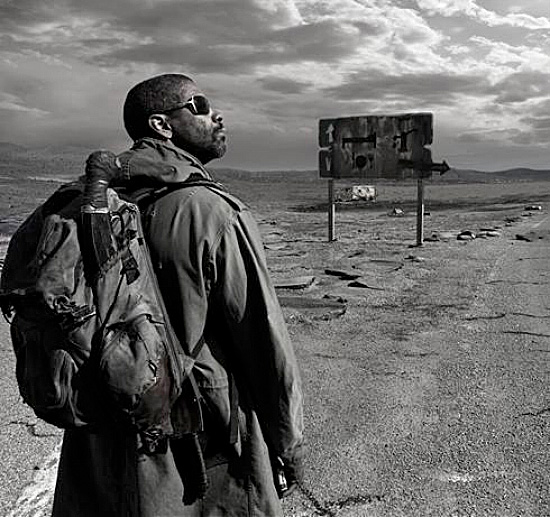
Last Tues. night we gathered together to watch the movie, The Book of Eli. This is a very thought provoking and interesting movie. If you are more interested, just Google a review and check it out. I'm not in the business of movie reviewing or recommending, so you will be spared my opinions here. The movie did stir a few thoughts in my head regarding "church", the bride of Christ.
The movie has the classic protagonist (Eli, the hero - lead character) vs. antagonist (Carnegie, the character who opposes the hero) plot line, but there is much more. For me, Eli reprsented freedom and Carnegie represented bondage, oppression power and control. Carnegie used the classic means to wield power; money, possessions, food/water and sex.
Eli was pursuing a path that lead to freedom, yet he was distracted by the intensity of his mission, which shackled him in a greater purpose; relationships with others. In The Book of Eli, all elements of the good vs. evil story portrayed the human condition so beautifully.
The question that comes up for me as I reflect is; how does the "church" well intentioned as it may be, wield power and control over people. We recognize the obvious in world history, so I'm not going to dwell on events of the past, a sad story for sure. I am thinking of today. I would submit to you that in today's church, the use of power and control is witnessed in what we will call moralism and legalism. Do you agree? What are your thoughts? How would you define these two terms?
Please add your comments and we will define these terms next time. Thanks in advance for sharing.
Vic
Subscribe to:
Comments (Atom)